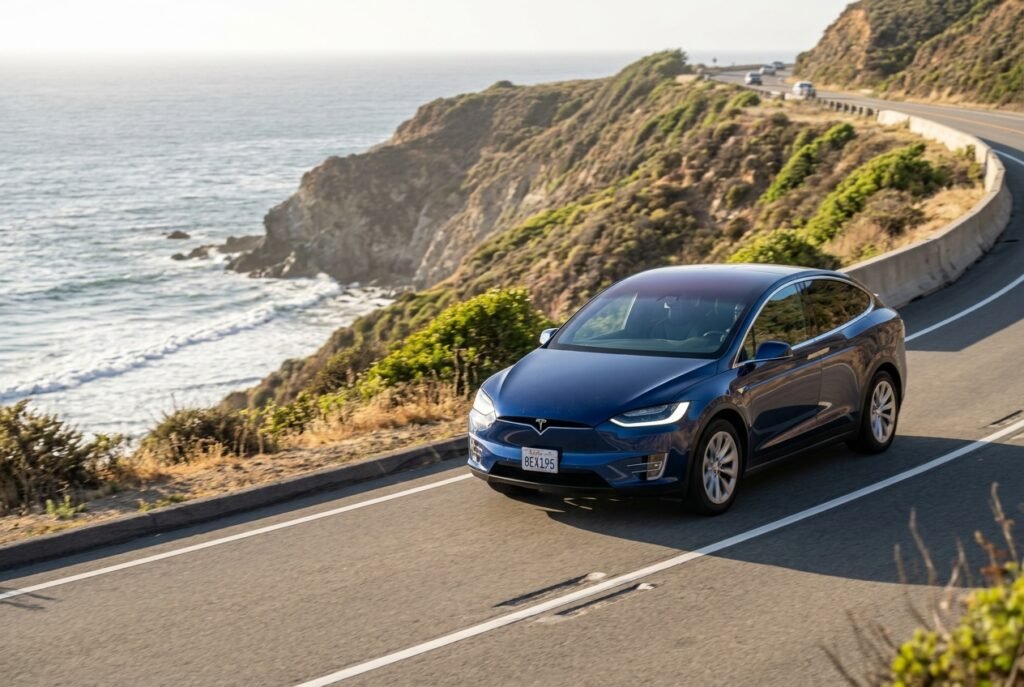

The Tesla Model X is designed for buyers who want an electric vehicle with more passenger and cargo flexibility than a traditional sedan. Its SUV-style design, spacious interior, electric powertrain, technology-focused cabin, and long-distance driving capabilities make it an option worth considering for families and buyers who regularly need additional space.
For US buyers shopping for an electric SUV in 2026, the Model X can offer several potential advantages. However, a vehicle purchase should always be based on personal requirements and total ownership costs rather than appearance or technology alone.
More Space for Everyday Family Life
One of the strongest reasons to consider the Model X is practicality.
Families often need more room than a traditional sedan provides. Grocery shopping, school activities, sports equipment, luggage, strollers, and weekend travel can all require additional cargo space.
The Model X’s SUV-style body can provide greater flexibility for carrying passengers and belongings.
The best way to determine whether the space works for your family is to visit a Tesla location and physically test the seating and cargo areas.
A Different Type of SUV Experience
Traditional SUVs generally use gasoline or diesel engines. The Model X uses an electric powertrain, providing a quieter driving experience and immediate electric torque.
Electric acceleration can feel very different from a conventional SUV. Power delivery is generally smooth and direct, which many EV drivers enjoy.
For families, quiet driving can also make longer trips more comfortable.
However, buyers should compare different EV SUVs before making a decision because range, charging speed, interior layout, performance, and pricing can vary significantly between models.
Potentially Lower Fuel Expenses
One of the potential financial benefits of switching from a gasoline SUV to an electric SUV is reducing or eliminating gasoline purchases.
Instead of buying gasoline, Model X owners charge the vehicle using electricity.
The actual financial benefit depends on local electricity prices, gasoline prices, annual mileage, charging location, and vehicle efficiency.
A driver who charges primarily at home may have a different energy cost from someone who relies heavily on public fast chargers.
Before purchasing, estimate your annual driving distance and compare your expected electricity expense with what you currently spend on gasoline.
Home Charging Can Improve Convenience
Home charging can be particularly valuable for families.
If your home has appropriate electrical infrastructure, you can charge the vehicle while it is parked. Overnight charging can make daily EV use more convenient because the vehicle can be ready for the next day’s commute or school run.
However, installation requirements vary from property to property.
Electrical capacity, charger location, wiring, installation labor, and local requirements can affect the total cost.
Homeowners should have the property evaluated before purchasing charging equipment.
Renters should check with their landlord or property management before planning a permanent charging installation.
Useful for Family Road Trips
The Model X can also appeal to families who frequently travel long distances.
An electric road trip requires different planning from a gasoline-powered trip. Instead of simply stopping at the next fuel station, drivers need to consider charging locations along the route.
Tesla’s charging ecosystem can make route planning easier, but drivers should still understand the charging options available for their particular journey.
Real-world range can vary depending on weather, speed, temperature, terrain, traffic, tire selection, passenger load, and driving style.
For that reason, drivers should not assume that the maximum published range will always be achieved in everyday conditions.
Charging Time Should Be Considered
Fast charging can make longer journeys more practical, but charging still requires planning.
The amount of time required can depend on the vehicle’s battery condition, charger capability, temperature, and other factors.
Drivers who regularly travel long distances should research charging locations before purchasing.
It can also be useful to identify backup charging options in case a preferred location is busy or temporarily unavailable.
Advanced Technology
Technology is another major part of the Tesla ownership experience.
The Model X uses a software-focused vehicle design with a large central display and connected features.
Software updates can add improvements or modify certain functions over time.
For technology-oriented buyers, this can be an attractive advantage.
However, buyers should carefully review the exact features included with the vehicle they are purchasing. Features and software capabilities can vary by market, vehicle configuration, and model year.
Insurance Can Affect the Total Cost
A common mistake when buying an SUV is considering only the monthly vehicle payment.
Insurance can represent a significant part of total ownership costs.
Insurance companies consider factors such as driver age, location, driving record, annual mileage, claims history, coverage limits, deductible, and vehicle characteristics.
The exact Tesla configuration can also affect the premium.
Before buying a Model X, request quotes from several insurers.
When comparing quotes, review the coverage rather than choosing solely based on the cheapest premium.
Important areas include liability coverage, comprehensive coverage, collision coverage, uninsured and underinsured motorist protection, deductibles, and exclusions.
Financing a Tesla Model X
Because the Model X is a premium vehicle, financing can have a meaningful effect on the total purchase cost.
Buyers should compare the annual percentage rate, loan term, down payment, fees, and total interest.
A longer loan term can lower the monthly payment but may increase the total amount of interest paid.
Depending on eligibility, buyers can compare available financing options from Tesla, banks, and credit unions.
Your credit profile and market conditions can affect the financing offer you receive.
Instead of asking only, “Can I afford the monthly payment?” consider whether the complete ownership cost fits comfortably within your budget.
Maintenance Is Different, Not Zero
Electric vehicles generally have fewer traditional powertrain components than gasoline vehicles.
The Model X does not require conventional engine oil changes because it does not have a traditional gasoline engine.
However, EV ownership still involves maintenance.
Tires, brakes, suspension components, cabin filters, windshield wipers, wheel alignment, and other vehicle systems require attention.
The weight and performance of an electric SUV can also make tire condition particularly important.
Owners should maintain appropriate tire pressure and follow the vehicle manufacturer’s maintenance recommendations.
Accident Repair Costs Matter
Another consideration for buyers is the potential cost of repairing a premium electric SUV after an accident.
Modern vehicles contain sophisticated electronics, sensors, body components, and other specialized systems.
Repair costs can therefore be significant depending on the type and severity of damage.
This makes appropriate insurance coverage especially important.
Before purchasing, ask your insurer how the vehicle’s configuration affects your premium and coverage.
Who Should Consider the Model X?
The Model X may be worth considering for buyers who:
- Need substantial passenger and cargo flexibility
- Want an electric SUV
- Have convenient charging access
- Regularly transport family members
- Frequently take road trips
- Prefer a technology-focused vehicle
- Want strong electric performance
- Can comfortably afford premium EV ownership
It may not be the best choice for someone who primarily needs a low-cost commuter vehicle.
A smaller EV, sedan, or different electric SUV may provide better value depending on the buyer’s priorities.
Model X vs. Model Y
The Model X and Model Y are both electric SUVs/crossovers, but they target different buyers.
The Model Y can be more appealing to buyers who want a practical crossover while keeping the overall vehicle size and purchase budget more manageable.
The Model X is positioned as a larger and more premium option for buyers who need additional space and want more upscale features.
Families should compare the actual passenger and cargo requirements before deciding.
Final Thoughts
The Tesla Model X can be an attractive electric SUV for families who want space, technology, electric performance, and convenient charging.
Its biggest potential advantages are its family-friendly practicality, quiet electric driving experience, technology, and ability to combine everyday transportation with longer trips.
However, the purchase price is only one part of the decision.
Before buying, compare financing, insurance, charging expenses, maintenance, taxes, registration, and expected annual mileage.
The right vehicle is not necessarily the most expensive or technologically advanced one. It is the one that provides the features you actually need while remaining affordable throughout the ownership period.
This article is for informational purposes only and does not constitute financial, insurance, legal, or automotive professional advice. Vehicle pricing, specifications, incentives, financing programs, insurance rates, features, and availability can vary by location and change over time. Buyers should verify current information before making a purchase.