
Choosing between the Tesla Model 3 and Tesla Model Y can be difficult because both vehicles offer electric driving, modern technology, strong performance, and access to Tesla’s charging ecosystem. However, they are designed for somewhat different types of buyers.
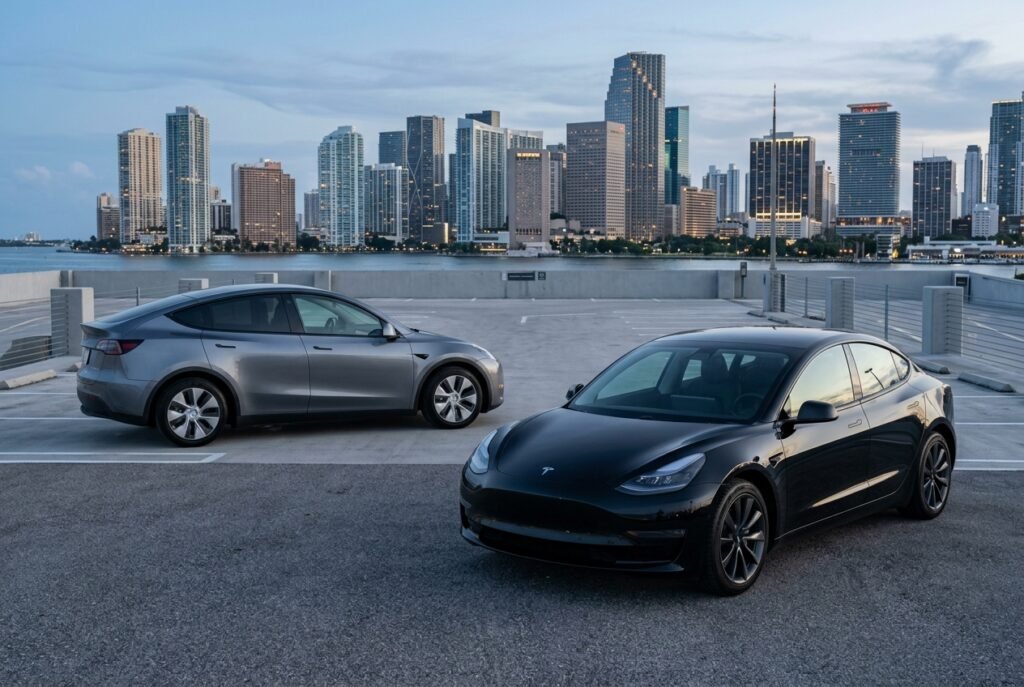
The Model 3 is a sedan, while the Model Y is a crossover. That basic difference can have a major impact on passenger space, cargo capacity, driving position, parking, and everyday practicality.
If you are planning to buy a Tesla in 2026, comparing these two vehicles based on your actual lifestyle is more useful than simply choosing the model that looks more attractive.
Tesla Model 3: A Sedan for Everyday Driving
The Model 3 is a compact electric sedan that can make sense for commuters, couples, small families, and drivers who prefer a lower vehicle profile.
Its sedan shape can be easier to maneuver in busy urban areas and may appeal to drivers who prefer the traditional car driving position.
For someone who primarily travels between home and work, drives around the city, and does not regularly carry large amounts of cargo, the Model 3 can provide plenty of practicality.
Its smaller overall footprint can also be useful in crowded parking areas.
Tesla Model Y: More Crossover Practicality
The Model Y takes a different approach.
Its crossover design gives buyers a higher seating position and additional flexibility for passengers and cargo. This can be particularly useful for families, travelers, and people who regularly transport larger items.
If your lifestyle includes grocery shopping, children’s equipment, sports gear, luggage, or frequent family trips, the Model Y may be more convenient.
The best way to determine the difference is to sit inside both vehicles and test the cargo areas yourself.
Which One Has More Practical Space?
For buyers who prioritize space, the Model Y generally has the more crossover-oriented layout.
A larger rear opening and flexible cargo area can make it easier to load bulky objects.
The Model 3 can still provide useful trunk space, but its sedan design may not be as convenient for large or unusually shaped items.
This is one of the clearest reasons to choose between the two.
If you rarely carry large items, the Model 3 may provide enough space.
If you frequently transport luggage, equipment, or family belongings, the Model Y deserves serious consideration.
Driving Experience
The driving experience is another factor.
The Model 3’s lower sedan design can provide a driving feel that appeals to people who prefer a lower center of gravity and a more traditional car-like position.
The Model Y offers the higher seating position associated with crossover vehicles.
Both benefit from the instant torque characteristics of an electric powertrain, providing smooth and responsive acceleration.
The exact performance depends on the vehicle configuration, wheels, software, road conditions, and other factors.
Charging and Daily Convenience
Both vehicles are electric, so charging access should be considered before purchasing either one.
For homeowners, having a suitable charging setup can make daily ownership easier. The vehicle can be connected while parked and charged according to your routine.
For renters or people living in apartments, public charging availability may be more important.
Before buying, identify charging locations near your home, workplace, and frequently traveled routes.
If you regularly take long road trips, also consider charging locations along your common routes.
Energy Costs
Both models can potentially reduce gasoline expenses because they use electricity instead of gasoline.
However, the actual cost depends on your local electricity rate, driving distance, vehicle efficiency, charging location, and driving habits.
Someone who charges primarily at home may have a different energy cost from someone who frequently uses public fast chargers.
Calculate your expected annual mileage and compare the estimated electricity cost with your current gasoline expenses.
Insurance Can Change the Comparison
Insurance is another important factor when deciding between the Model 3 and Model Y.
The cost of insurance can vary based on driver age, location, driving history, annual mileage, claims history, coverage limits, deductible, and vehicle characteristics.
The exact Tesla configuration can also influence the premium.
Before purchasing, request insurance quotes for both models.
Do not compare only the monthly premium. Review liability limits, comprehensive and collision coverage, uninsured and underinsured motorist protection, deductibles, and exclusions.
If one vehicle produces a significantly higher insurance cost for your situation, that difference should be included in your overall buying decision.
Financing the Model 3 vs. Model Y
Financing can also affect the decision.
Buyers should compare the annual percentage rate, loan term, down payment, fees, and total interest.
A lower monthly payment does not automatically mean a cheaper vehicle. A longer loan term can increase the total interest paid.
Compare financing options from Tesla, banks, credit unions, and other eligible lenders where available.
Calculate the complete monthly cost, including the loan payment, insurance, charging, maintenance, registration, and taxes.
Maintenance Considerations
Both vehicles are electric, meaning they generally have fewer traditional powertrain components than gasoline vehicles.
However, neither should be considered completely maintenance-free.
Tires, brakes, suspension components, cabin filters, windshield wipers, wheel alignment, and other systems still require attention.
Tire wear can be particularly important because electric vehicles can be relatively heavy and deliver strong instant torque.
When comparing the Model 3 and Model Y, consider not only the purchase price but also the expected maintenance and tire expenses.
Which Tesla Is Better for Families?
For families, the Model Y may have an advantage because of its crossover design and greater cargo flexibility.
Parents may appreciate the easier loading of luggage, groceries, child equipment, and other everyday items.
The Model 3 can still work well for smaller families, especially if cargo requirements are modest.
A family with two adults and limited luggage needs may find the Model 3 perfectly practical.
Which Tesla Is Better for Commuters?
For a driver who mainly commutes to work and spends most of the time driving alone or with one passenger, the Model 3 may be the more natural choice.
Its sedan design can be easier to park and may provide a more compact driving experience.
However, commuters who frequently carry work equipment or travel with passengers may prefer the additional flexibility of the Model Y.
Consider Your Parking Situation
Parking can be an overlooked part of the buying decision.
If you live in a city apartment or regularly use compact parking spaces, the Model 3’s sedan design may be more appealing.
If you have a larger driveway or garage and frequently need additional cargo room, the Model Y may make more sense.
Measure your garage and parking space before purchasing if space is limited.
Which One Offers Better Value?
Value depends on what you actually need.
If you do not need extra cargo flexibility, paying more for a larger vehicle may not provide much additional benefit.
On the other hand, if you regularly carry passengers and equipment, the extra practicality of a crossover can be valuable.
Instead of asking which vehicle is objectively better, ask which vehicle provides the features you will actually use.
Tesla Model 3 vs. Model Y: Quick Decision
Choose the Model 3 if you:
- Prefer a sedan
- Mostly commute or drive around the city
- Want a compact vehicle
- Do not regularly carry bulky cargo
- Prefer a lower driving position
- Want to focus on everyday efficiency and practicality
Consider the Model Y if you:
- Prefer a crossover
- Need more cargo flexibility
- Regularly transport passengers
- Take family trips
- Carry sports or outdoor equipment
- Prefer a higher seating position
Final Thoughts
The Tesla Model 3 and Model Y can both be excellent options for different buyers.
The Model 3 is more suited to people who want a compact electric sedan and primarily need efficient everyday transportation.
The Model Y can be more attractive to families and drivers who need additional passenger and cargo flexibility.
Before purchasing either vehicle, compare current pricing, financing, insurance quotes, charging options, maintenance costs, taxes, registration, and expected annual mileage.
The best Tesla is not necessarily the most expensive or the most popular model. It is the one that fits your daily driving needs and long-term budget.
This article is for informational purposes only and does not constitute financial, insurance, legal, or automotive professional advice. Vehicle pricing, specifications, incentives, financing programs, insurance rates, features, and availability can vary by location and change over time. Buyers should verify current information before making a purchase.