
For many Tesla owners, one of the biggest advantages of owning an electric vehicle is the ability to charge at home. Instead of making regular trips to a gas station, a Tesla can be plugged in at home and charged while the vehicle is parked.
For buyers considering a Tesla in 2026, understanding home charging is important because it can affect convenience, daily driving habits, electricity costs, installation expenses, and the overall ownership experience.
Why Home Charging Matters
A typical gasoline vehicle needs to visit a fuel station when the tank gets low. An electric vehicle can often start each day with a useful amount of charge simply because it was plugged in overnight.
This can make a major difference for people who drive regularly. A Tesla parked at home can be connected after returning from work, school, shopping, or other activities and charge while it is not being used.
The biggest benefit is convenience. Instead of planning a separate trip for fuel, charging can become part of the normal parking routine.
Tesla Wall Charging at Home
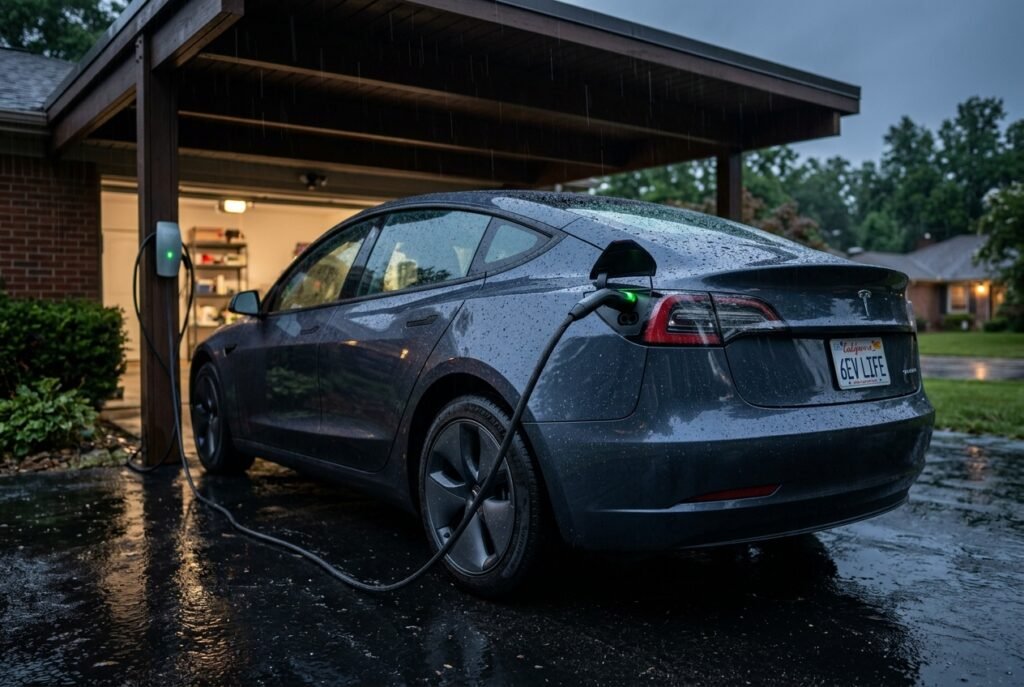
Tesla owners can use home charging equipment designed for residential installations. Depending on the property, electrical system, and selected equipment, installation may provide substantially faster charging than a standard household outlet.
A dedicated home charging setup can be particularly useful for drivers with longer daily commutes.
Before purchasing equipment, buyers should check their home’s electrical capacity and have any electrical work performed by a qualified professional. Installation requirements can vary depending on the age of the house, electrical panel, available capacity, local regulations, and charger configuration.
Can You Charge a Tesla With a Regular Outlet?
In some situations, a Tesla can be charged using a standard household electrical outlet with compatible charging equipment.
However, charging from a regular outlet is generally much slower than using a dedicated higher-powered home charging installation.
For someone who drives only a small number of miles each day, slower charging may be acceptable. Drivers with longer commutes may find a dedicated home charging solution more convenient.
The right choice depends on how many miles you drive, how long the vehicle remains parked, and what electrical infrastructure is available at your home.
How Much Does Tesla Home Charging Cost?
Home charging does not have one universal cost.
The electricity cost depends on factors such as your local utility rate, how much energy your Tesla uses, how far you drive, and when you charge.
Some electricity providers offer time-of-use pricing, where electricity can be cheaper during certain hours. If available in your area, charging during lower-cost periods may reduce your energy expense.
There can also be an upfront cost for home charging equipment and electrical installation. A buyer should consider both the equipment cost and installation requirements when calculating the overall cost of switching to an electric vehicle.
Home Charging vs. Supercharging
Tesla Supercharging can be extremely useful for road trips and situations where a faster charging session is needed.
Home charging serves a different purpose.
Home charging is primarily about convenience and maintaining the vehicle’s battery between daily trips. Supercharging is more useful when traveling longer distances or when home charging is unavailable.
For many owners, the two systems work together rather than replacing each other.
A driver might charge at home most nights and use fast public charging when taking a long-distance trip.
Is Home Charging Necessary for Tesla Ownership?
No, but access to convenient charging can make Tesla ownership easier.
People living in detached homes may have more flexibility because they can potentially install charging equipment in a garage, driveway, or carport.
Apartment and condominium residents may have different challenges. Charging availability can depend on the building, parking arrangement, property management, and local charging infrastructure.
If you live in an apartment, it is worth checking your parking and charging options before purchasing an EV.
Tesla Charging for Daily Commuters
Home charging can be particularly attractive for commuters.
Imagine returning home with a partially depleted battery and plugging the Tesla in for the night. The vehicle can remain parked while charging, allowing the driver to avoid making a separate fuel stop the following morning.
This can make an EV feel different from a traditional gasoline car. Instead of thinking primarily about filling the vehicle’s tank, owners often think about maintaining enough battery charge for their expected driving.
What Buyers Should Check Before Installation
Before installing a home charger, buyers should consider:
- Electrical panel capacity
- Garage, driveway, or carport location
- Distance between the electrical panel and charging location
- Local electrical requirements
- Installation labor
- Utility electricity rates
- Charging schedule
- Daily driving distance
- Parking arrangements
A professional electrician can help determine what installation is appropriate for the property.
Can Home Charging Reduce Ownership Costs?
It can, but the savings depend heavily on local electricity prices and how the Tesla is used.
Electricity may cost less per mile than gasoline in some areas, but the comparison varies by vehicle efficiency, gasoline prices, electricity rates, driving conditions, and charging source.
Buyers should calculate their own expected cost rather than assuming that every Tesla owner will save the same amount.
Home charging may also reduce the need for frequent public charging, which can make the ownership experience more predictable.
Is Tesla Home Charging Worth It?
For buyers who have reliable access to residential parking and regularly drive a Tesla, home charging can be one of the most useful parts of EV ownership.
It offers convenience, can simplify daily charging, and may provide an opportunity to take advantage of lower electricity rates when available.
However, buyers without dedicated parking should investigate their charging options before purchasing.
The best Tesla ownership experience is not only about the vehicle itself. Charging access, insurance, financing, electricity prices, maintenance, and daily driving requirements all matter.
Final Thoughts
Tesla home charging can make electric vehicle ownership significantly more convenient, especially for drivers who park at home every night.
Before buying a Tesla, consider your daily mileage, parking situation, electrical system, local electricity rates, and expected charging needs. A small amount of planning before purchasing can help you choose a charging setup that fits your lifestyle and budget.
Tesla vehicle specifications, charging equipment, electricity prices, installation requirements, incentives, and ownership costs can change over time and vary by location. Buyers should verify current information and local requirements before making a purchase.